Writing a book is hard. Translating it is harder. But translating it into English? That might be the single smartest move an author can make today.
The Global Stage Is English-Speaking
Whether we like it or not, English dominates the global literary landscape. If your book is only available in your native language — Hungarian, Polish, Korean, Portuguese — then it’s likely being read only within national borders.
But if you translate your book to English, suddenly your potential audience jumps from millions to billions. You gain access to:
- Global self-publishing platforms like Amazon KDP
- International literary agents
- Foreign press coverage
- Awards, reviews, and visibility you simply won’t get at home
And here's the truth: if you're serious about your message or story reaching the world, English is the door.
Why Book Translation Is So Hard
So why doesn’t everyone just do it?
Well… because book translation is notoriously difficult. And here's why:
1. Tone is Everything
Books aren’t just about what is said, but how it’s said.
Capturing the author’s voice in another language requires deep cultural and stylistic knowledge, not just fluency.
2. Literary Language Doesn’t Translate Literally
Idioms, metaphors, subtle humor — these are minefields. A literal translation often comes off awkward, flat, or confusing.
Example:
Hungarian: „Más kárán tanul az okos.”
Literal English: “The smart learns from others’ damage.”
Actual English: “A wise man learns from others’ mistakes.”
Big difference.
3. Professional Translators Are Expensive
A high-quality literary translator can charge $0.08–$0.15 per word, which means that a 70,000-word novel could cost $5,000 to $10,000+ to translate.
And they’re often booked out for months.
4. Machine Translation Alone Isn’t Enough
Google Translate or DeepL might help for menus and emails, but a book? That’s an entirely different beast.
Machine translations tend to be overly literal, lose nuance, and lack coherence over long texts. You don’t want to publish something that reads like a manual when you wrote a novel.
So What Can You Do?
Most authors find themselves stuck between two bad options:
- Pay thousands for a professional human translator
- Settle for free tools that butcher your writing
That’s where AI comes in — but only if it’s trained right.
Atlazis: The AI Book Translator Built for Authors
Imagine this:
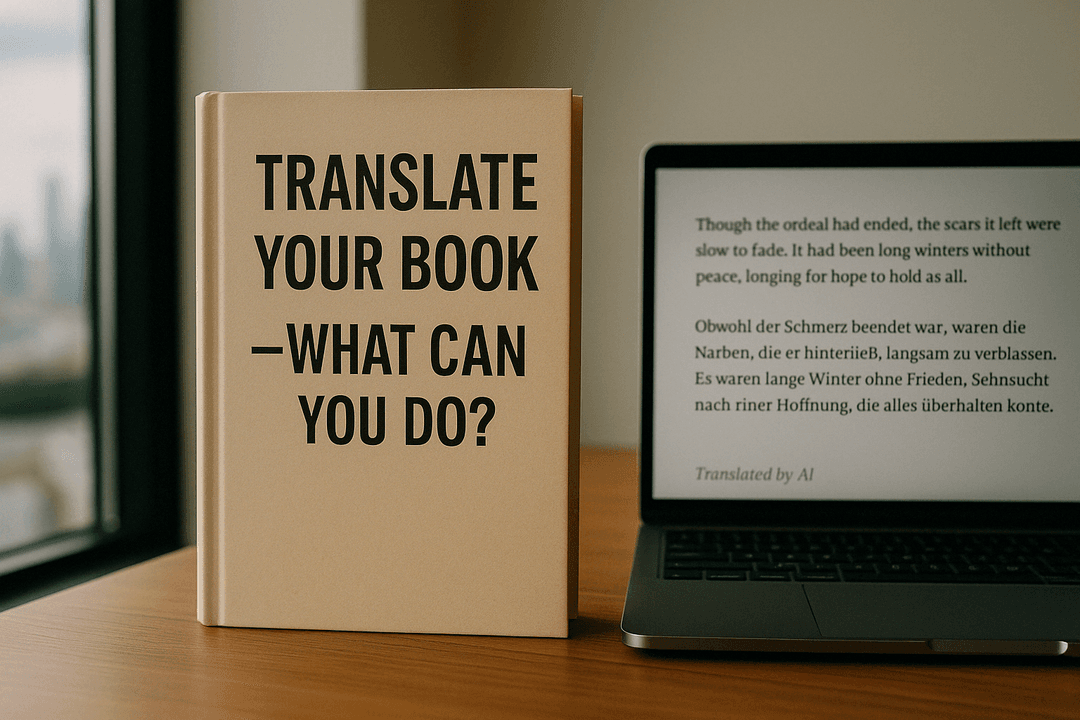
- You upload your book
- Choose your target language
- Add a tone prompt like “make it warm and literary”
- Click “Translate”
- Get a full-length DOCX file that reads like it was written by a human
That's what Atlazis offers.
Unlike generic translation tools, Atlazis is trained specifically for long-form storytelling. It keeps your tone, respects formatting, and creates output you’d be proud to publish — or send to an editor for polishing.
And the best part?
You can try it out without spending thousands.
Final Thought
Your story deserves to travel. Your message deserves a global audience.
Don’t let language be the barrier.
Let Atlazis be the bridge.
Try Atlazis now